These tooth-colored brackets ensure minimized frictional contact and optimal wearing comfort with their smooth, rounded design. Since they are made entirely of ceramic, they are suitable for patients with a nickel allergy.
CHILDREN AND ADOLESCENTS
Self-ligating brackets
At Dr. Nowroozi & Colleagues in Berlin, modern self-ligating brackets made of metal or optionally ceramic are used. Thanks to their innovative clip closure, the archwires can be inserted and removed quickly and comfortably—completely without wire or rubber ligatures. The special sliding mechanism also reduces archwire friction, ensuring greater comfort during treatment.
Another advantage of these brackets is that the reduced friction often results in shorter treatment times and fewer check-up appointments. At the same time, their well-thought-out design supports optimal oral hygiene, making them a particularly practical and modern solution for orthodontic treatments in Berlin.
CHILDREN AND ADOLESCENTS
Comfort Metal brackets
These braces are made of metal. They are much more delicate than the standard version and are therefore more comfortable to wear. They allow for a shorter treatment time and improved oral and dental hygiene.
CHILDREN AND ADOLESCENTS
STANDARD BRACKETS
These braces are made of metal and constitute basic medical care. As a standard model, they meet the criteria for adequate, appropriate, and cost-effective treatment.
CHILDREN AND ADOLESCENTS
Additional appliances – fixed braces
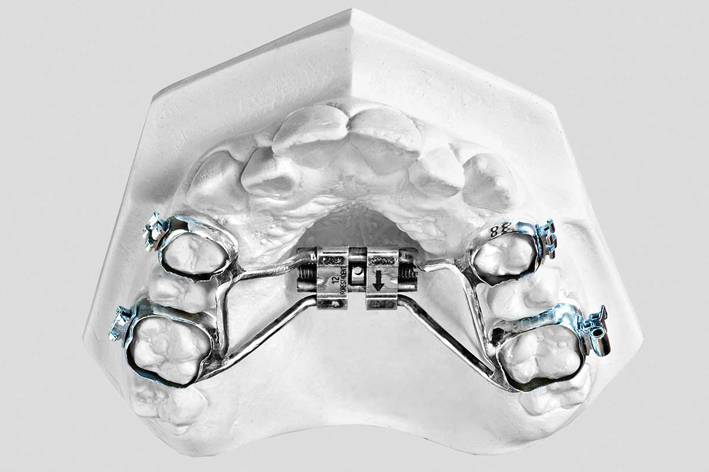
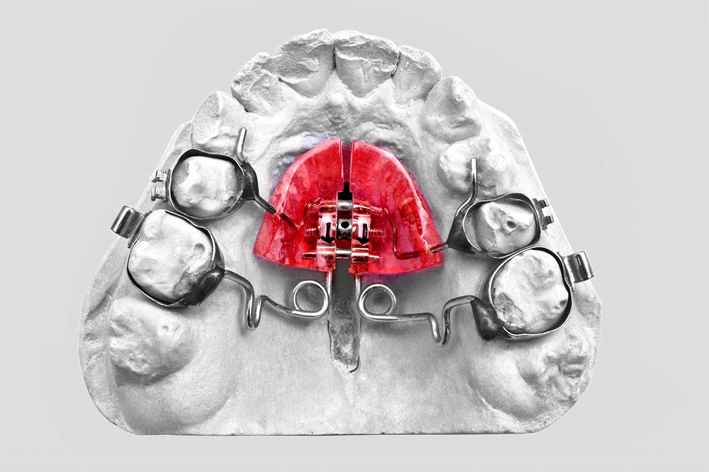
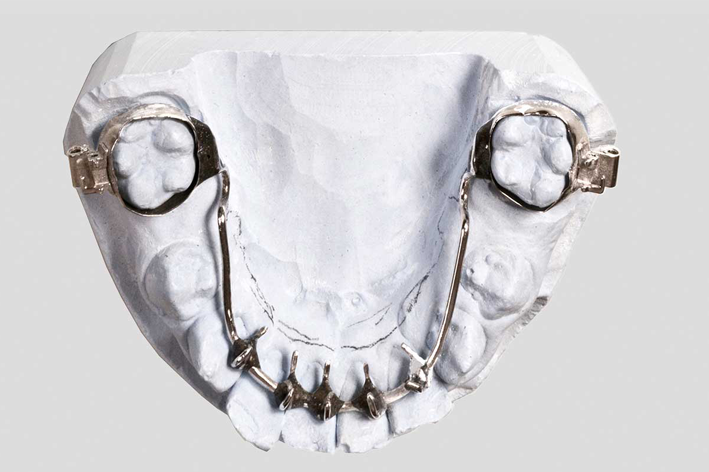
The rapid maxillary expansion appliance consists of a special screw (Hyrax screw), which is welded to the bands of deciduous molars or premolars and molars and then firmly cemented in place. By turning the screw, the upper jaw is expanded in the area of the growth suture in the middle of the palate (sutura palatina mediana). As a clinical sign of successful upper jaw expansion, a temporary gap between the central incisors (diastema) appears. In addition to conventional rapid maxillary expansion, there is also the option of connecting the Hyrax screw with lateral acrylic bite blocks and cementing it in place. The indication and duration of wear correspond to those of conventional rapid maxillary expansion. Another form of the rapid maxillary expansion appliance is the hybrid Hyrax. In this case, a conventional rapid maxillary expansion appliance is combined with mini-implants in the anterior region of the palate.
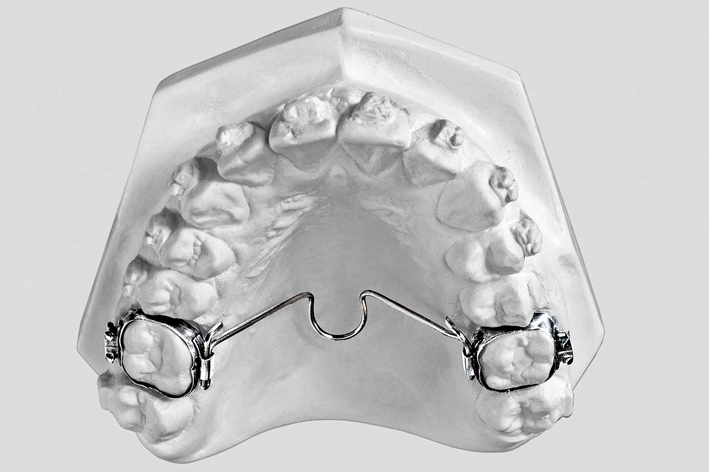
The transpalatal arch, also known as a palatal bar, connects the bands of the first molars using a wire running along the palate. This keeps the first molars in position in the sagittal and transverse planes.
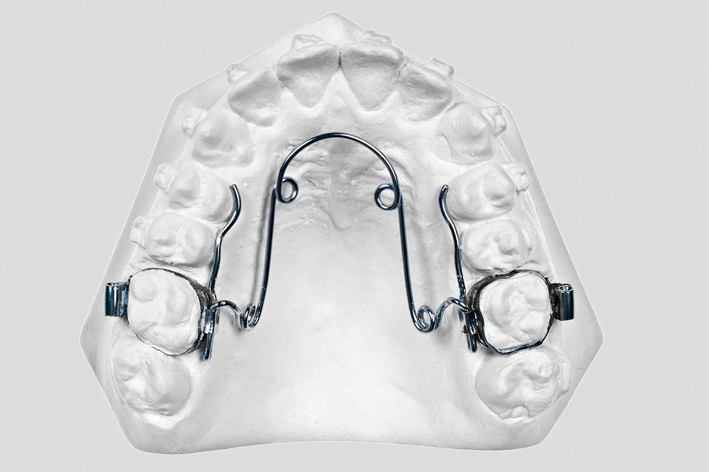
The quad helix consists of a spring framework running along the palate with four circular loops, which is attached to the maxillary molar bands. Depending on the activation, the upper jaw is expanded in the anterior or posterior region.
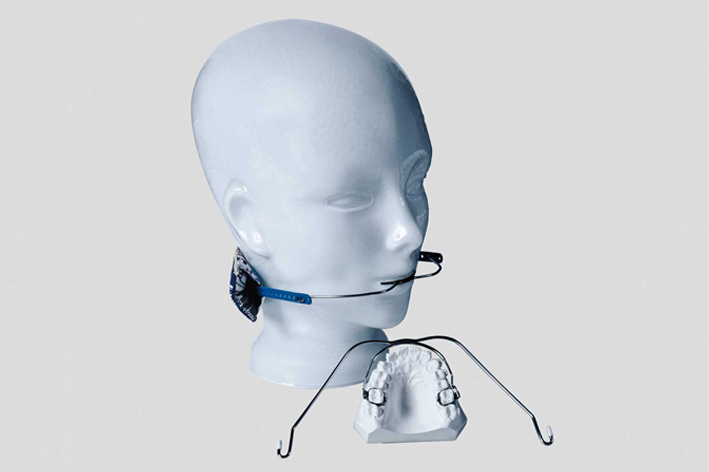
The headgear, also known as a facebow, consists of an inner bow and an outer bow. Both are connected to each other in the middle. The ends of the inner bow are inserted into the designated tubes on the molar bands. The ends of the outer bow serve to hold the elastic traction. The headgear is mostly used for the distalization of molars in cases of crowding or for the intrusion or extrusion of teeth.
The Pendulum appliance features a palatal anchorage and is attached to premolars and molars via bands. With the aid of activatable elastic elements, distalization of the molars or premolars can be achieved, thereby creating space in the posterior region of the upper jaw independently of patient compliance.
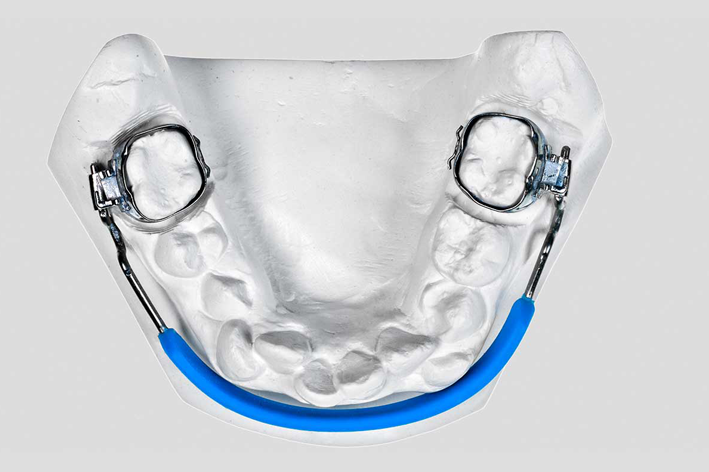
The lip bumper works by utilizing the body's own forces and is inserted into tubes attached to the molar bands of the lower jaw. Lip pressure is transmitted via the lip shield to the first molars, causing the first molars to be held in position or to undergo slight distalization.
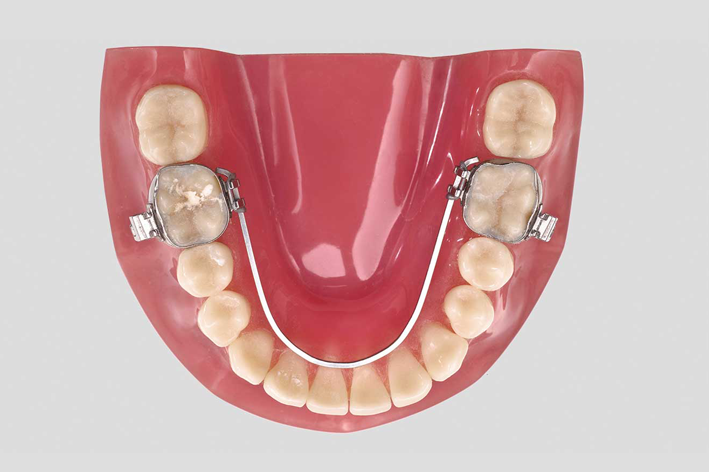
The lingual arch, also known as a lower lingual arch, is attached to the molar bands of the mandible and prevents mesialization of the first molars by resting against the incisors.
Tongue spikes are a modification of the lingual arch and serve to keep the tongue away from the incisors in cases of incorrect tongue posture.
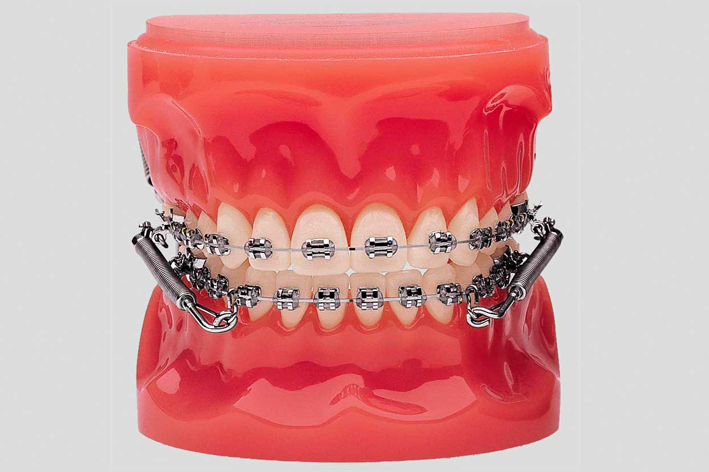
The Forsus spring clips onto the fixed appliance and features a telescoping element with springs. This advancement mechanism allows for simultaneous bite correction and tooth alignment. This can lead to a shorter treatment time.
CHILDREN AND ADOLESCENTS
REMOVABLE APPLIANCES
CHILDREN AND ADOLESCENTS
Placeholder | Spaceholder
are removable braces that are used prophylactically to keep gaps open. Dental gaps caused by premature loss of primary teeth should be kept open to prevent neighboring teeth from tilting and thus to preserve the space for the permanent tooth in the jaw. Wearing space maintainers at night is usually sufficient because the teeth are not actively moved, but merely held in place.
CHILDREN AND ADOLESCENTS
ACTIVE PLATES
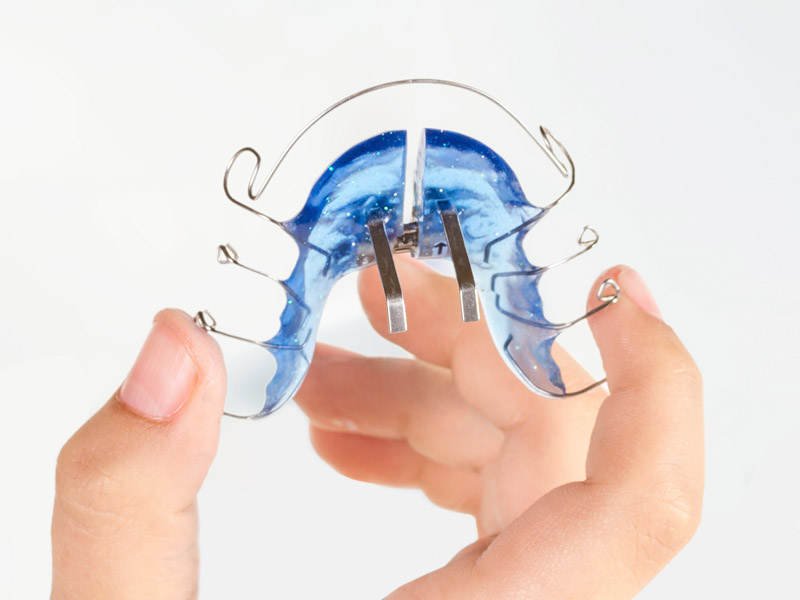
These are removable plates that „snap into place“ when inserted into the upper and/or lower jaw and fit relatively securely. They are primarily used for moving individual teeth and expanding the jaw. The effect of these plates is achieved through screws and springs (active elements). The screws are „turned“ according to instructions, which causes the teeth to move or the jaws to be expanded.
CHILDREN AND ADOLESCENTS
FUNCTIONAL ORTHODONTIC APPLIANCES
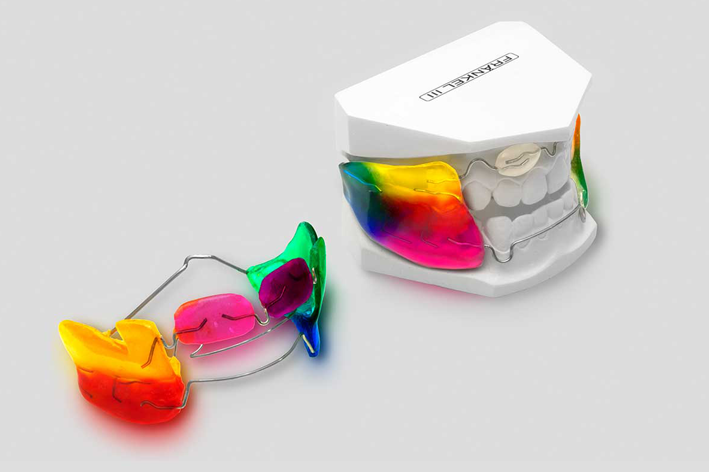
The Fränkel function regulator consists of a skeletal acrylic base with vestibular shields in the posterior region and pads in the labial region. A palatal arch serves for transversal stiffening and can be supplemented by a tongue/play bead. Due to the protruding cheek and lip shields, the soft tissue pressure of the surrounding tissues protected so that the jaw can develop freely.
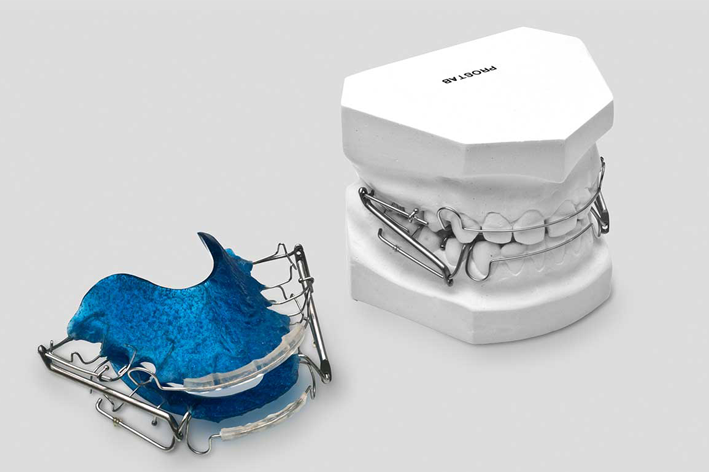
The Prostab plate combines the advantages of the active plate and functional orthodontic appliances. The elements that cause the lower jaw to advance are located in the vestibule. This keeps the interior of the mouth clear and improves patient acceptance. In addition, expansion screws for space creation and other active elements can be incorporated.
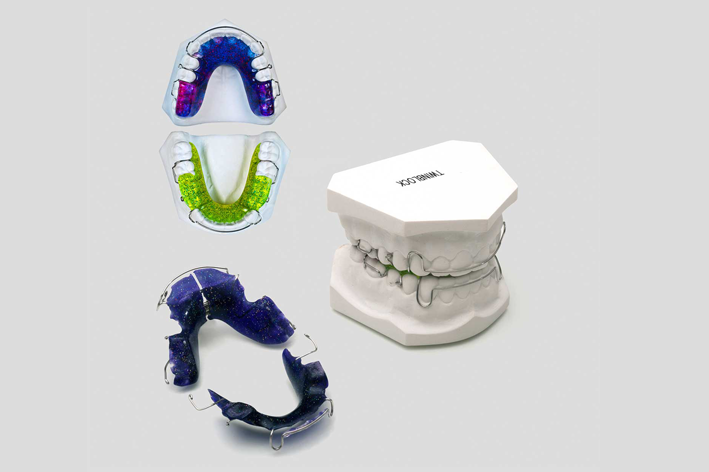
The twin block combines the advantages of removable active plates and functional orthodontic appliances. It consists of an upper and a lower plate that feature acrylic blocks/bite blocks between the dental arches. These bite blocks form an inclined plane that fixes the mandible in the therapeutic position when the mouth is closed. It is very comfortable to wear and can be supplemented with active elements such as screws and springs.
The twin-block appliance combines the advantages of active plates and functional orthodontic devices. An integrated double bar in the upper jaw plate slides over an inclined plane in the lower jaw plate, guiding the mandible forward when the mouth is closed and thereby correcting the mandibular position. In addition, expansion screws for creating space and other active elements can be incorporated.
By combining these mechanisms, the double-plate appliance not only enables a functional realignment of the jaw position but also allows for targeted tooth movement. The modular design allows for individual adaptation to the patient’s specific orthodontic needs. For example, additional springs or pressure elements can be integrated to move individual teeth or correct crowding. This versatility makes the double-plate appliance an effective treatment device for Class II malocclusions, particularly during the growth phase when jaw growth can be therapeutically influenced.
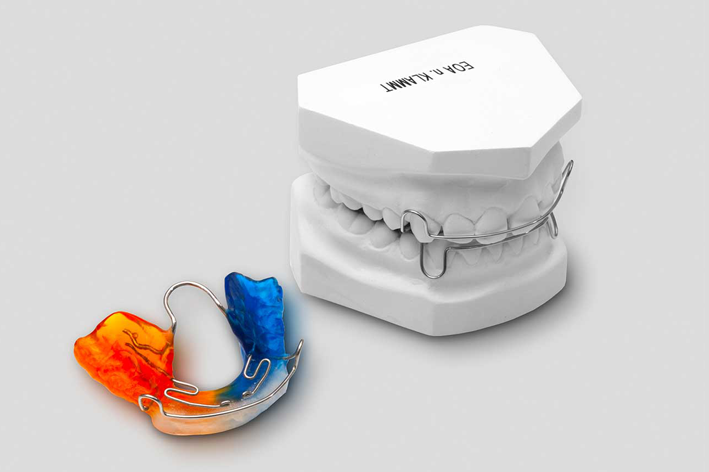
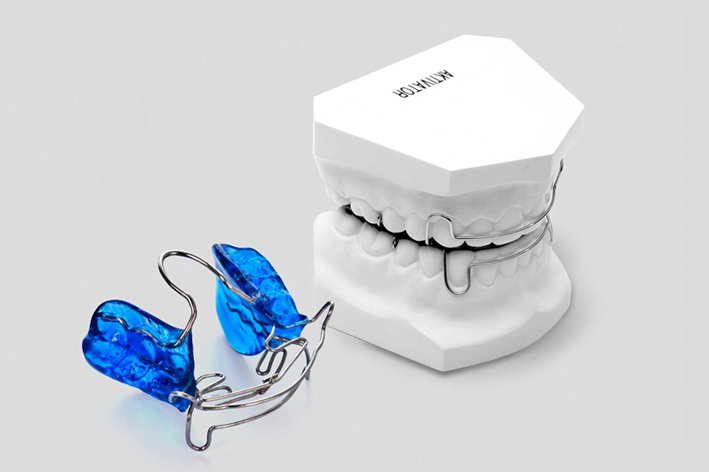
The elastically open activator is a further development of the activator and, due to its more slender framework, makes speaking easier. It consists of a resin base in the posterior teeth region, a palatal bar (Coffin spring) for stabilization, and a labial bow for the upper anterior teeth. Furthermore, a protrusion bow or two protrusion springs can be attached in the region of the upper incisors. The lower incisors are enclosed in resin. The EOA is used for mandibular retrognathia as well as for habitual open bites and deep bites.
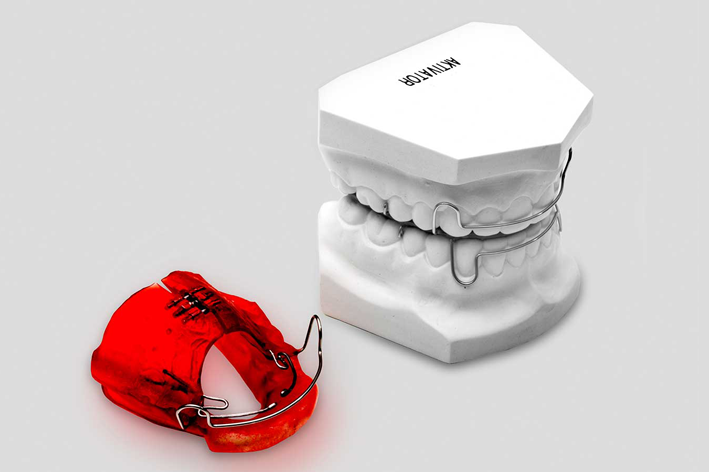
The activator consists of a plastic base in the lateral and anterior tooth regions. The upper and lower anterior teeth are held in place by a labial arch. It is used in cases of mandibular retrusion as well as in habitual open bites and deep bites. The device applies stimulation to the muscles, which leads to a change in the tissue structure of the bone and muscles.
The elastically open activator is a further development of the activator and, thanks to its more slender framework, makes speaking easier. It consists of a resin base in the posterior tooth region, a palatal bow (Coffin spring) for stabilization, and labial bows for the upper and lower anterior teeth. Furthermore, protrusion bows or springs can be attached in the region of the incisors. It is used for mandibular retrognathia as well as for habitual open bites and deep bites.
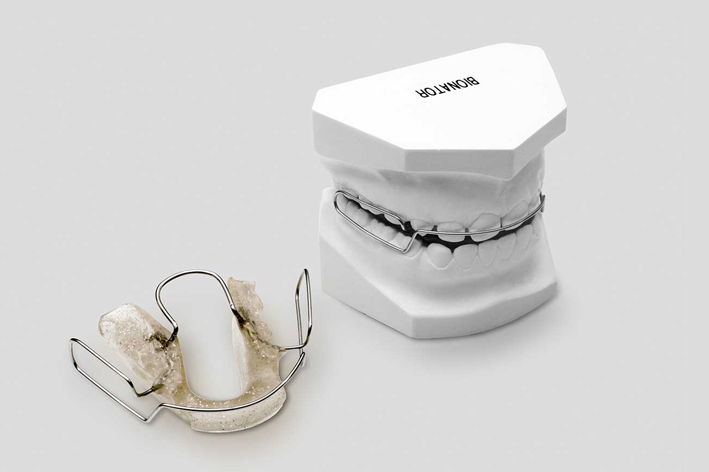
The bionator consists of an acrylic base in the area of the posterior teeth and lower front teeth. The tongue position is normalized by the tongue bow, and the lip pad encourages lip closure. The buccinator loops keep the cheeks and thus the soft tissue pressure away, enabling the subsequent development of the jaw in this area.
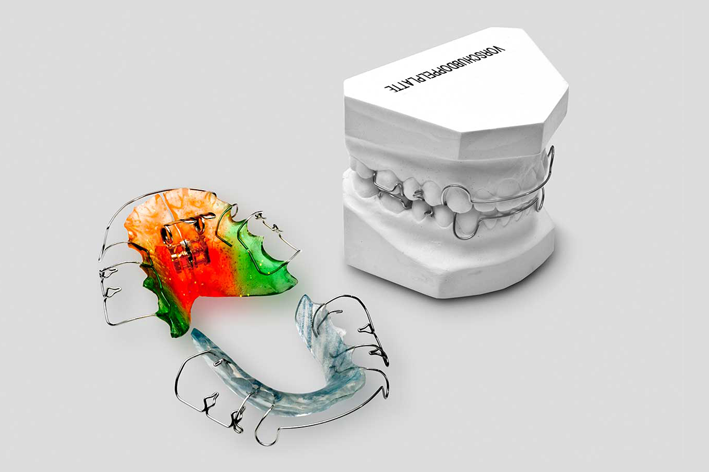
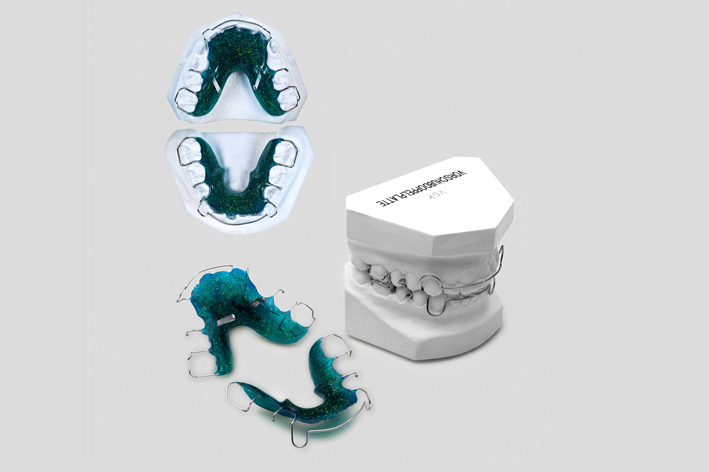
The Müllerdorn plate combines the advantages of active plates and functional orthodontic appliances. The upper jaw plate incorporates lateral bars/pins that engage with a guide plane in the lower jaw plate; when the mouth is closed, this causes the lower jaw to move forward, thereby correcting the position of the lower jaw. In addition, expansion screws can be incorporated to create space, along with other active elements.
CHILDREN AND ADOLESCENTS
SPLINT THERAPY
A positioner allows for fine adjustments to tooth alignment and helps maintain that alignment. It is made of silicone and covers both the upper and lower jaws. In the lab, the teeth are positioned in the desired alignment using a setup model. The silicone splint fabricated on this model then contains „suction chambers.“ The resulting negative pressure moves the teeth in the desired direction.
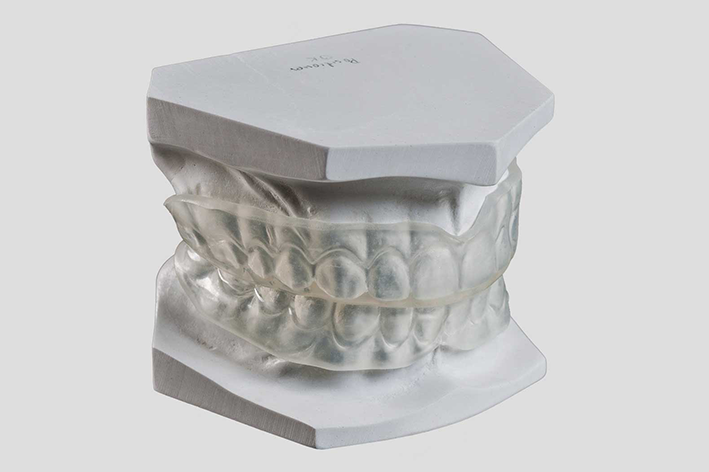
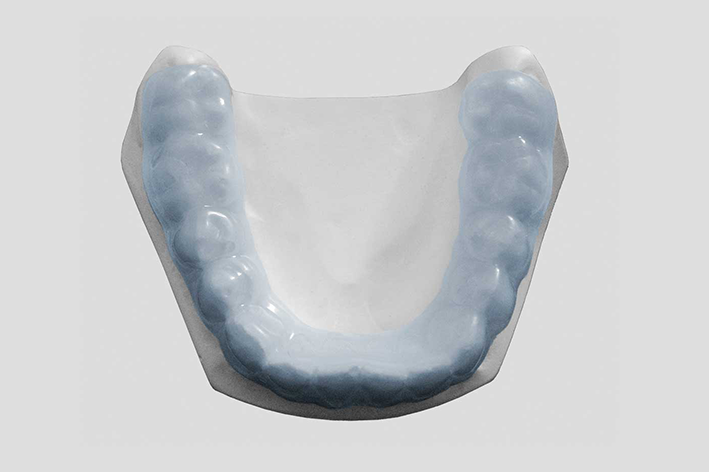
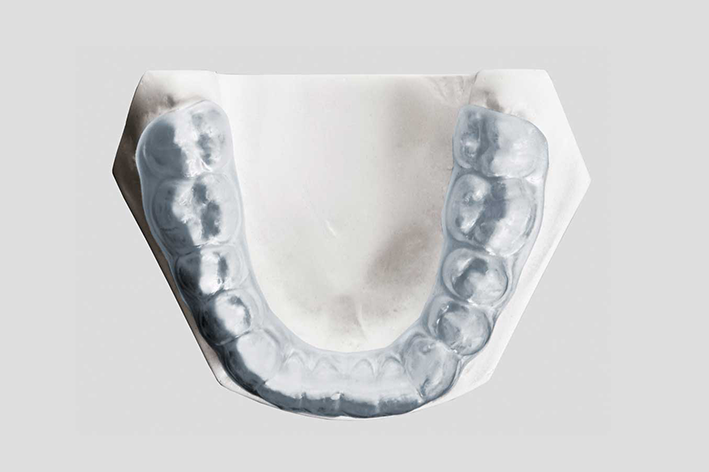
A Copyplast splint is a sturdy, biocompatible plastic splint that can be used to stabilize the results of treatment.
A Bioplast splint is a soft, biocompatible plastic splint. It is used to provide initial relief for temporomandibular joint problems, as a bite splint for deep bites, as a custom teeth-whitening tray, or as a nightguard.
CHILDREN AND ADOLESCENTS
RETENTION APPLIANCES
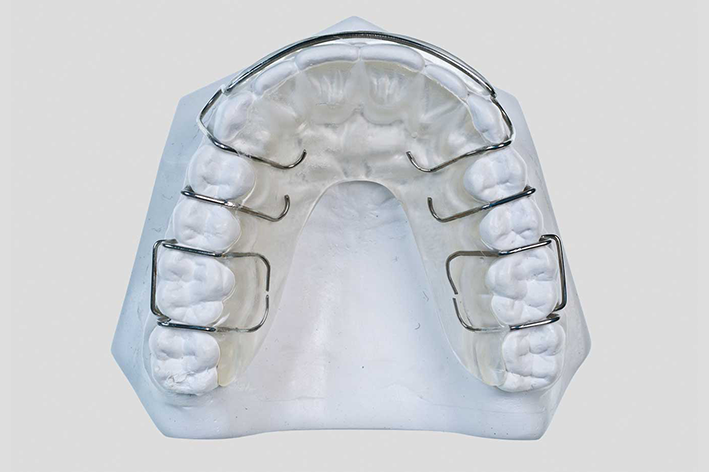
Removable plastic plates without active elements to stabilize the treatment outcome.
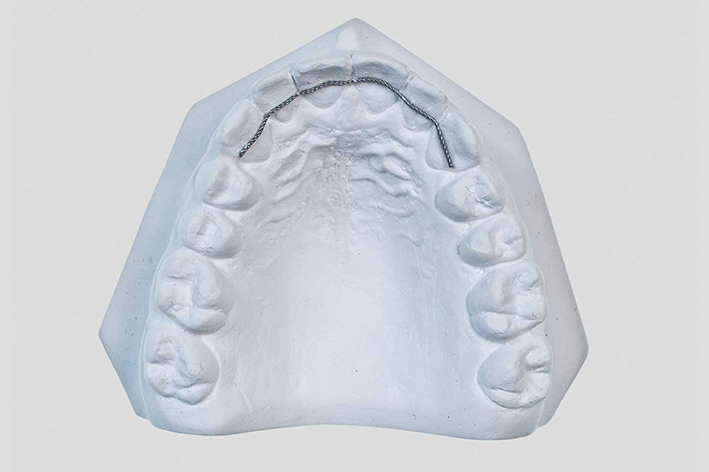
The long-term retainer consists of a thin wire that permanently stabilizes the teeth. It is bonded to the inner surfaces of the incisors and canines and is virtually invisible. After a short adjustment period, the retainer is very comfortable to wear. This makes it a particularly reliable and recommended method for ensuring that the patient’s orthodontic treatment results are maintained long-term.
CHILDREN AND ADOLESCENTS
SPORTS MOUTHGUARD
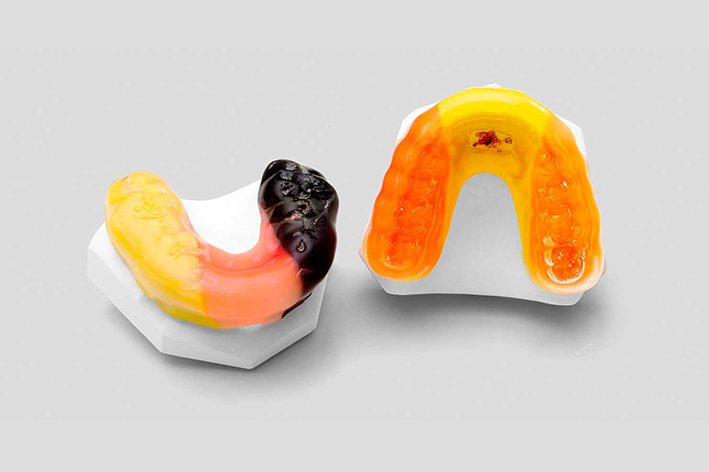
It protects the teeth from injury during sports. Whether playing soccer, riding a bike, or participating in combat sports such as boxing or karate, the teeth are highly susceptible to injury. Most insurance companies do not cover the resulting costs. To make the mouthguard, impressions of the teeth are taken, and a custom sports mouthguard is fabricated in a laboratory.
CHILDREN AND ADOLESCENTS
ADDITIONAL SERVICES
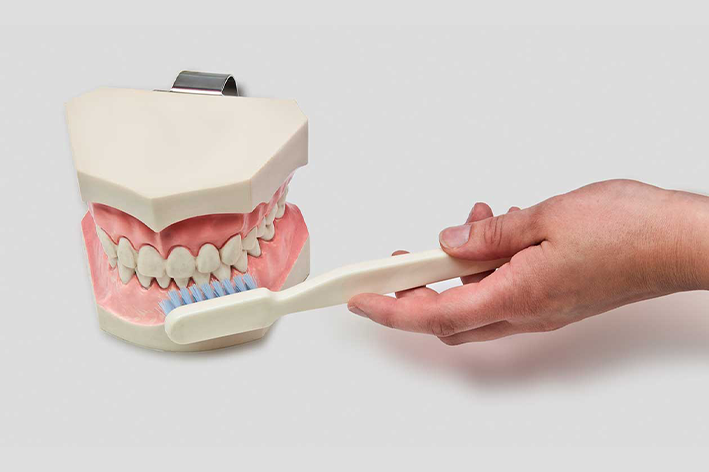
Good oral hygiene is essential during orthodontic treatment. Cleaning teeth is particularly difficult with fixed braces, and plaque often remains trapped. That is why our dental hygienists demonstrate and explain how to brush your teeth and braces correctly and regularly. In addition, if desired, your teeth will be thoroughly cleaned, polished, and treated with fluoride at every appointment.
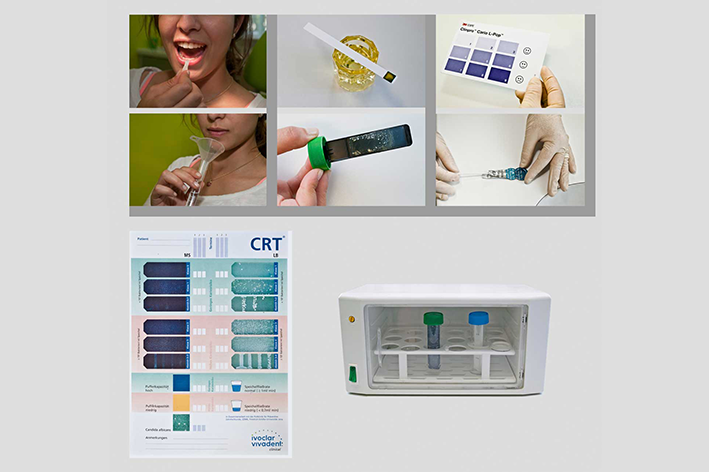
Using several saliva tests, a patient's individual risk of developing cavities is determined. For this purpose, the concentration of certain bacteria in the saliva is measured. This makes it possible to establish an individual prevention plan for each patient. This is very important, especially for high-risk patients before and during orthodontic treatment, so that at the end of the treatment the teeth are not only straight, but also healthy.
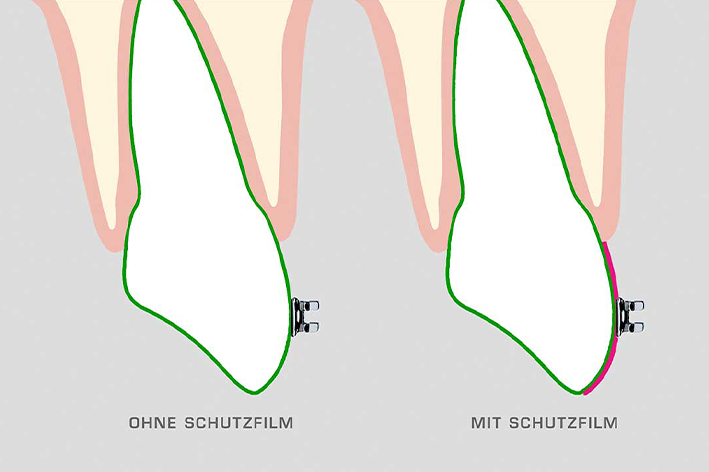
If dental plaque remains on the enamel for an extended period, acid forms, which then attacks the tooth and strips it of minerals (a process known as demineralization). When the fixed braces are finally removed, the teeth are straight but have unsightly white or brownish spots that can only be removed by grinding down the tooth. To reduce the risk of demineralization, the teeth are treated with a sealing varnish after the brackets are bonded (in addition to individualized preventive care).
If individual muscles in the mouth and facial area are too strong or too weak, this can lead not only to speech disorders, but also to an incorrect resting position of the tongue and an incorrect swallowing pattern. These myofunctional disorders frequently cause misalignments of the teeth and jaws. In many cases, therefore, muscle training in collaboration with speech-language pathologists is important for the success of orthodontic treatment. Since there are sometimes long waiting times for speech therapy, we recommend the following exercises until the scheduled appointment with the speech therapist can take place.
Look in a mirror and pull your lips back slightly with your fingers.
When you swallow now, you can see how your tongue presses against your teeth.
Place a small piece of gum or a sugar-free candy on your tongue. When your tongue is relaxed, the small piece of gum or candy should rest on the front third of your tongue. When your lower jaw is at rest—that is, when you’re sitting or standing normally and relaxed—you shouldn’t feel your lower front teeth at all with your tongue, and you should barely feel your upper front teeth.
Now press the small object with your tongue against the hard part of the palate, where the small wrinkles are, approximately in the middle.
If you do this right, your tongue shouldn't be visible between your teeth. The only thing that can happen is that you swallow gum or candy, and that's not a big deal.
If you practice diligently, your tongue will feel strange at first because you'll get some serious muscle soreness.
If you practice every day, you'll soon notice that the alignment of your teeth improves.
Dental AssistantOnline
Automated assistant for Dr. Nowroozi. General information only — not a medical diagnosis.






 Dental Assistant
Online
Dental Assistant
Online