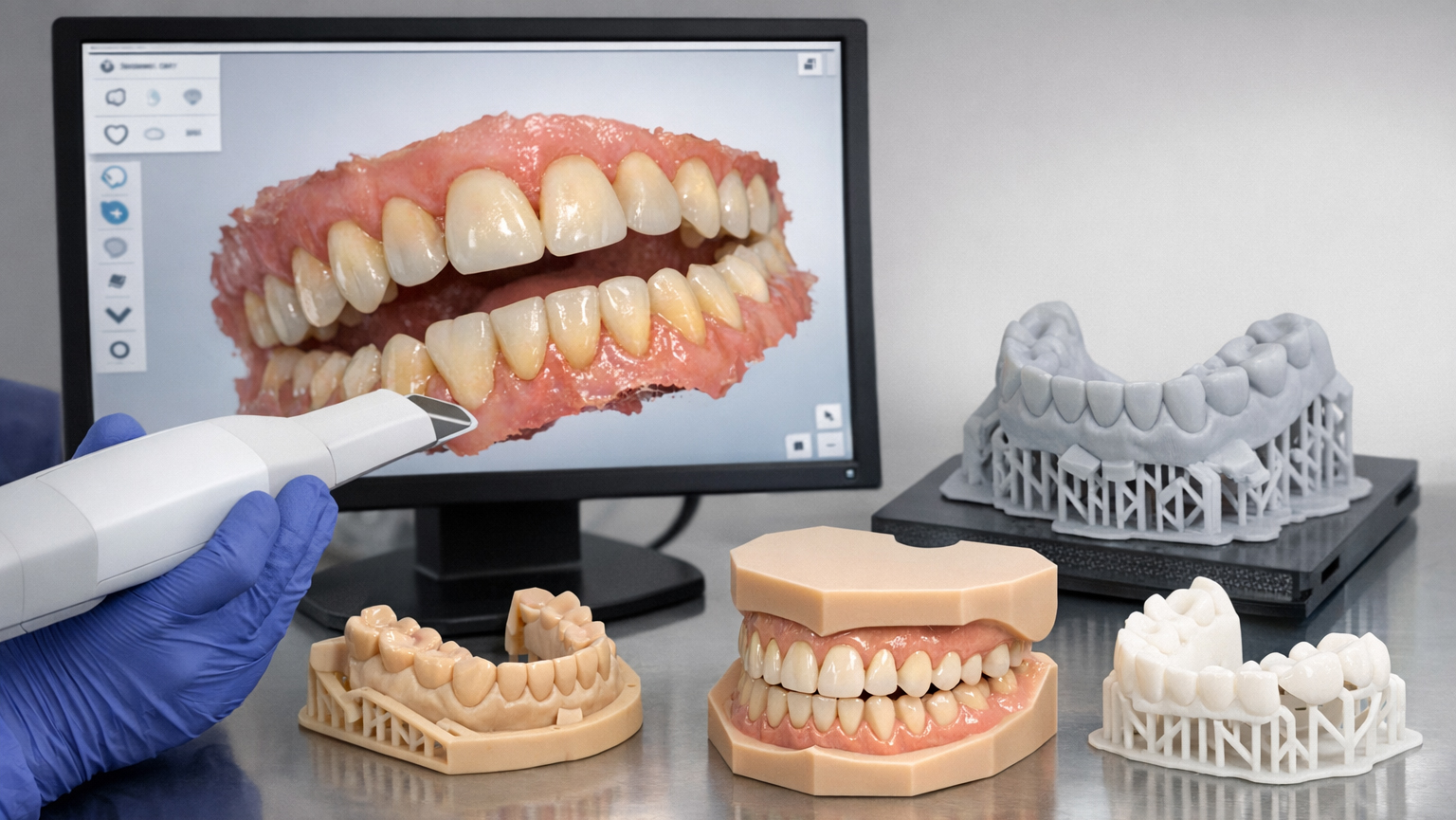
Digital orthodontics has made remarkable progress in recent years, offering dentists and orthodontists the opportunity to perform treatments with greater precision and efficiency. Using advanced software and digital imaging, patients' dental situations and jaw structures can now be assessed much more precisely and in greater detail. This technology involves the use of 3D scans that create exact digital models of the teeth, enabling tailored treatment plans to be developed. A key advantage of this method is the reduction in treatment time and higher accuracy. In addition, patients can track changes during treatment in real time, which promotes greater transparency and satisfaction.







 Dental Assistant
Online
Dental Assistant
Online